Translate

28 September 2014

We lost but I won

As I have moved through life I have come to appreciate that there are languages and methods of communicating that are truly universal. Things like how to coo to a child of any nationality, play with a dog, and the like. Others I have found are music, medicine, futbal, and now baseball.

I mentioned in a previous post that I met a couple of Kazakh guys here who want to resurrect Little League. We met at a local ex-pat coffee shop (their idea, not mine) and as we were leaving they asked if I would like to play Sunday, today. I thought how cool that would be to play baseball and get to know yet another group of folks here. That and I have committed to helping them bring Little League to the kids here who need mentors. But I digress.

There is just one ball field here in town, the former field used for all Little League games. Let me try to describe it for you. Did you ever play on a dirt field, with lumps and rocks, where bases were trees, and where there were no fences? Hold that picture in your mind's eye and add this. The field was covered with rocks, bottles, broken glass, dog shit, and the odd condom. No grass but lots of tall weeds which helped if you were in the outfield and were trying to run down a grounder that escaped from the inflield.The dug outs are from whence came the condoms and where one can find the Kazakh equivalent of Boone's Farm's finest. Butts were all around. The chain link fences had huge holes in them. There were so many acorns on ground that it was like running on ball bearings.

The foul lines were marked with red socks tied onto the fence and because the sides of the field were so ratty we played with two bases. Slow pitch except when it took too long in which case it became faster pitch. "Home runs are outs" meaning that if you hit the ball over the fence, or it went through a hole, you were out because it was a major pain to climb and get the ball. All the while being carefull not have you own ripped off by the junk yard dogs that were guarding something or other. In short is was baseball heaven.

We chose up teams. I played first base, actually second base with a left shifted infield as we only had four to six players per side, depending on who was too drunk, hung over, was smoking a cigarette or a doobie, or just wanted to watch. Oh, the coolest part, we were as follows: five Kazakhs, three Koreans, three Cubans, and me, an aging American. I told Lynne I was going to play and she gave me a short just barely perceptible eye roll. Something about how I don't seem to know my limitations. I called her this evening and the first question she asked, even before the "Hi Honey" was did I have all my parts and were they still working. 

Other ground rules, three strikes, no balls. Shut up and I'll pitch as I damn well please (slow or fast, or....) and tell Mike to wipe his damn shoe. Mine seemed to hunt all the dog shit and lets leave it at that. Some guys couldn't hit, some couldn't field, and one Korean played professional ball just last year! All the Koreans had on full uniforms except one didn't have a mitt. One the other end of the clothing spectrum was yours truly in shorts, hiking shoes (whoda thunk baseball when packing) and a tee shirt (gray of course). Two of the Koreans excused themselves and said they would be back in half an hour. Timur, the Little League guru, looked at me with a grin and said, "that's an hour and a half in Kazakhstan." Sure enough right on Kazakh cue they reappeared, one a sheet or two to the wind and the other doing the "tobacco" thing. 

Kids from the neighborhood came and shagged some of the foul balls and sat on top of the dugout. They of course were informed about the hopeful happenings Little League wise.

So I'm home, a touch sore but intact. Don't know the score and don't care. I do know I'll be back next Sunday, limitations be damned.

Oh Wow


As in oh wow what an amazing concert! I finally caught up with the National State Zhambyl Philharmonic last night and oh wow. There were about 80 members of the orchestra with only a flute, clay flute, tympani, two accordions, and a jaw harp that weren't tradional stringed instruments. There were appearances by a tenor and a soprano and oh wow. All were dressed in period costumes. I'll post this link again:

https://www.youtube.com/watch?v=qQ0c8RBgWtw

You will have to copy and paste, but it's well worth it. In addition there were monstrous stringed bass instruments with a sound box that was a easily a cubic meter. I am only able to find images of the instruments below. Please, check out the link. The accordions sounded like brass, the stringed instruments blended like fine pastry, and the repertoire was as incredible as it was ethereal.

Kobyz (I know that's what I thought too)
Dombra

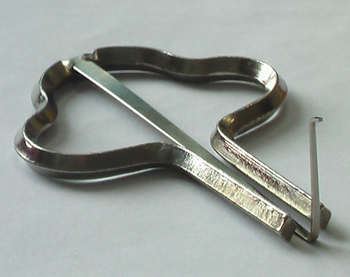
Jaw harp
and the clay flute was magic.

24 September 2014

It's been a month

In fact exactly four weeks since bidding beloved family and friends farewell. These milestones, always seem an appropriate time for reflection. For me the first month is always intimidating as I don't speak the language and, for that matter, don't do well in crowds or large cities. And yet I find I have adapted rather well. I smile more and marvel as to how the Kazakhs seem to morph and move through their universe here. I imagine awakening on 16 Dec 1991, finally out from under decades of oppression and timidly wondering, "Now what?" I'd be at once terrified and filled with ecstatic.

While there isn't much smiling here nor back home for that matter there is a lightness of being and a simultaneous resignation that I initially found contradictory. Now I simply accept is for what it is..life in a former Soviet state.

It seems as if the whole region has a communal case of PTSD; the reluctance of my generation to completely embrace the ability to be spontaneous, or perhaps more to he point, of my profession to embrace medical excellence while discarding anecdote/don't rock the boat medicine. Yet in my small corner there is a gradual awakening that pride of position is truly в порядке (OK). As my dad would say (I think) "Not enough people have died yet" for change to be complete and it's true.

Yesterday I attended a small conference sponsored by a pharmaceutical enterprise at the Intercontinental Hotel. For those of you considering a visit be assured that there are first rate accommodations here in Almaty. The conference was per usual; first rate buffet lunch including horse, mutton, and the like. The meeting was hosted by some regular types from Astana but also a contingent of reps that were straight out of central casting; the typical young slightly aggressive high heeled career woman or slick suited, spit polished man both of whom unfortunately have become somewhat of a cartoon caricature of the industry world wide. During the conference there was a slide indicating the rank order of pharmaceuticals prescribed here. In the US they vary by region and season but the number one medication is generally an antibiotic. Here the first three are:

  • "Actovegin": a homeopathic remedy, highly diluted, (one sure as hell hopes) from calf's blood, given IV to facilitate movement of 02 across membranes. People get this IV and a nap at same time. Small wonder it "works". Lance Armstrong used it so how bad could it be??!
  • "Kreon": In the US it is "CREON", a group of replacement enzymes that are given for pancreatic dysfunction as in chronic pancreatitis, resection, cystic fibrosis and the like. Here it is given to people that are vomiting or have diarrhea. No dose adjustment for kids.
  • Vitamins of course.
  • Third generation cephalosporins: a class of antibiotics that have a broad spectrum of activity when what we try is to give one that will kill a specific bug.
All of the above is of course heavily steeped in anecdotal experience and is driven by both habit and the pharmaceutical industry where it would seem there is no investment in what is medically appropriate or cost effective, despite claims to the contrary.

To be fair, about 10 years ago there was study on the No.1 revenue producer at CVS pharmacies; echinacea. Yep that stuff for which there isn't a shred of decent evidence as to its efficacy or safety. There were something like 20 different varieties sold. Each was tested for content and the findings were telling. Some of the capsules had the stated amount, some had no echinaciea and still others had up to 2x the stated amount. So sure I judge, just in both directions. And here as everywhere, folks get really puckered if they aren't getting what they think they need from us.

At this point in the journey I like to contemplate what I do and don't miss about home as I have time, lots of it when I don't speak the language, to contemplate my circumstances. 

What I miss: Well the obvious for starters. Lynne's warm embrace, my life's inspiration, companion, and side kick. Eli, Amber, Sam and "?" . My biking and swimming homies who have so generously invited me into their collective lives, Breadworks, Horton's, Southern Indiana from a bike, Zombie rides, any ride for that matter, swim workouts by Nate, clean(er) air, much more.

What I don't miss: This runs the risk of offending but I try to be relatively transparent with these blogs. I don't miss the gun culture. You know what I mean. The "any gun is a good gun" and "we just need to be better armed to protect ourselves from the bad guys". Guns are definitely not on the streets here and it is more of a relief to me than I would have ever expected. I am surprised that I was preoccupied as much as I was with the "Jimmjoeraybobs  with a Budlite" that would shoot if a car (or bike) cut him off. I don't miss the vocal fry, I know, a little too brittle, contrary, and curmudgeon-like. Definitely not politic. But it find it really annoyed me more than I thought or was willing to admit. Here the voices are lilting and lack pretension.  Oh and the liver rattling bass tones that sidle up beside me at a stop light, nope don't miss it. I wish the whole pants on the floor thing would wear itself out, don't miss it.

Tomorrow is my first Russian lesson, an instructor at USAID for the last 21 years.


22 September 2014

Up is down and down is up!


(For sonme reason this wasn't published, sorry) Ask directions in Botswana and you were typically directed to “that side”. Here it is “up” or “down”. The difficulty I have is that my aged brain thinks in terms of “up”= north while “down”= south. Here up is toward the mountain range which is south. The street maps are oriented with north at the bottom of the page so needless to say I truly am upside down! Thankfully the streets slant in up or down so I generally get it.

One of the purposes of my blogs is to record what I see/do so I can refer to it later and recall an experience out of my demented fog so if this seems somewhat superficial I apologize.

Some first impressions:
  • The people here are beautiful, a blend of ethnic Asian and Caucasian. Unlike other places I have been about 10% of the folks here look like me so most people I encounter assume that I know the language. I’ll learn it enough to embarrass myself only slightly less.
  • Much of the home construction here is from the Soviet era and is crumbling, except the statuary which is all very solid and dramatic. They really were bastards.
  • Ask people here what they think of their president Nazarbayev and they shrug stating that he is something of a corrupt administrator but given that the nation is 23 years old, with changes he has affected not the least of which was moving the capital, he is accepted. Admittedly this only a small sample of the professional world. Bribery thrives and the police are more like peacocks. They aren’t armed as they generally don’t need to be. I am as safe or safer here than in downtown Louisville after dark.
  • They despise Putin. Much of the north of this country is ethnic Russian and the happenings in Ukraine preoccupy many here.

I have made a friend with the husband of one of my colleagues. Kainar helped me move in yesterday then took me to the mountains all of 25min away. We took a tram from about 1500m to 3000m and were at saddle in beautiful cascade like mountain range, way above the tree line. You could see Almaty in the distance but is was obscured by the smog. Kainar loves to ski and does so in the evenings three nights a week and kept insisting that I join him. The slope is shallow and looks tame so what the heck. Come late November…...
  • I saw my first wild apple tree yesterday. The apples are a little bigger than crab apples and taste surprisingly good.
  • I was trying to sleep last night as the 10hr time difference still has me in its ever loosening grasp. There was some loud music and singing up (south) the street. I went up there and was impressed to see a western style concert with a huge screen in one of the large open spaces in the city. This is the weekend where they celebrate the writing of the constitution. Kids dancing and others watching.
  • Go to YouTube and search Kazakhstan dombra music or folk music. It is amazing the sound one can get from a two stringed instrument. This link should work. The music has really emerged since independence in 1991.              https://www.youtube.com/watch?v=YyfVwWvkBSg

Do svidaniya!

Last things first

Vignettes and thought from last week:

My diet has reverted back to what it generally is when I am going solo; oats, fruit, milk and yogurt. I can get all of those here and the quality is quite good. If I purchase produce at the Green Bazaar it is always fresh and fantastic. Milk is generally > 3.5% butter fat, as is the yogurt, so I am back to my "whole milk builds strong bones" childhood.
Produce at the Green Bazaar
The downside of this diet is that I periodically get tired of cold food. Yes I can cook, rather well, but what's the point?  Friday a friend and I were set to go get some shash-lyk but he backed out. So I consulted the local expat newsletter, "Steppen' Out" published by the US Consulate. There was a concert of the "National Wood Instrument Orchestra" that night and the venue was close by. I walked there to scout it out and there on the front was a poster showing a orchestra composed of all national instruments. Sweet!

That evening I returned to the venue to find only a few folks there. I went to the ticket window, bought one, then tried the main door, locked. Well this was turning into a true adventure. I spied a young couple heading for a side entrance, followed, and found myself in a foyer of what looked like a college hall. Very nice folks us down some stairs and ramps to the basement (this is getting way cool!) and across the building to a basement room, divided in half by a curtain, dimly lit, and smelling of wet concrete. In front of about 100 empty chairs in rows was a semicircle of five music stands. I found a seat in the back  and waited, at once resigned and excited.

With complete solemnity and purpose of movement, out from behind the curtain come four men and a women dressed in period garb from the 18th century; long white curly wigs, red jackets, white shirts with frilly collars and cuffs, knee length pants with white stockings, and shoes with bows. The woman was in a huge hooped dress. One of the guys, the youngest, gave a bit of an eye roll as he sat down as if to say he hoped his friends on the audience would just listen to the music and not be blinded by the dress. There was a flute/piccolo player (the woman) then an oboe, French horn, bassoon, and clarinet. The National Wind Instrument Orchestra I assumed, stifling a laugh. The clarinetist read a program in Russian and all I recognized was "Mozart". So for the next 90min I listened politely to music I normally dislike while I marvelled at my mis/good fortune. There were young families with their kids, young couples in love with heads resting on shoulders, students, professional types, and me.

Yesterday I visited the Almaty Applefest at the "Park Named After the First President" or simply "The First President's Park" (mind you he is the only president thus far). It is a city wide celebration of the "almaty" or "apple" in Kazakh.


My favorite music makers
 I had several clinic days last week that were delightful as medicine is a "language" I can speak. My colleague, a member of the faculty at the university, generally sees only adults. Virtually all the patients have ECGs, indicated or not. Many patients have diagnoses of myocardial infarctions in the face of clean (and unindicated) angiograms.  Again we spent much of the time undiagnosing various scary maladies. As in other settings (in particular the US and more particular HI) when reassured that they weren't as sick as first informed they were often nervous and even confrontive.

The first and thus far only president
I find it very difficult to interrupt the perpetuation of not only a false disease process but also the attendant sick role that accompanies it. At home I have to be extremely gentle and politic as this can put distance between a patient and their doctor. Here I find the exercise of reassurance casts an anxious pall over the Family Physician as things here seem rather siloed. Casting any doubt on a specialist's impression might have extra-profession consequences for a physician of a "lower" specialty (read caste). At home, and here, it is too easy to see, immediately refer, and think you are practicing good medicine. I find that to be a complete abdication and struggle with colleagues that do that.

Here (and at home to a lesser extent) medicine seems quite enmeshed in regulation, both real and imagined, the consequence of the old Soviet style of care. Key to success in medicine is to stay under the radar, or stay politic, or both. Kazakhstan's health care has come light years since 1991, to be sure, but all those in power were here at independence and default to what they know (as would we) yielding a bureaucratically stratified system lacking nuance and modulation.

In the US, we have an over-abundance of specialties that are finer focused than Family Medicine. Fair enough, we are fortunate to be able to do so, I suppose, but when is enough...well...enough? Is it appropriate to have a CT/MRI scanner on every corner? Hospitals clustered within several blocks of each other with duplication of services? Non-profit medical institutions that really aren't? Urgent care is on the rise as we no longer have the type of linear medical care relationships that assure better care. If we don't see our patients when they are sick of what value are we? Here, and in other places I have been, all care seems in the context of a single visit or opinion. Follow up with the same physician and benefiting from that familiarity is rare.

Proximity of the city to the mountains
We saw a woman with a hypertensive situation needing immediate attention. She was to go to the hospital the next day as that was when she could get there and when they would see her. (I have heard many conflicting opinions about how hospitals work here and none seem particularly flattering. Still the stories have come from expats so I won't commit the comments to paper or blog.) I mentioned to my colleague that her patient could go to the pharmacy in the clinic, get a medication, take it and lie down in infusion room. We could take her BP and interval history as we were leaving and if she was not better could take her to the hospital to try to expedite her care. I could tell that my colleague wanted to refer and move on but out of respect to me she instructed her patient as I advocated. Two hours later she was out of danger. I asked her to come back the next day and her BP was fine. No where near as dramatic as treating sepsis in remote Botswana but compelling never the less.
Out my back window

Friday I took my phunky phone to where I bought it (Beeline). It was raining a cold, gentle rain and I enjoyed the walk. I was first in line as I needed an English speaking assistant before she was occupied by another customer. She had graduated from the English Language University here and had majored in same, score! She was very kind as she let me know that it was the fault of the phone and not the SIM card and that their obligation only went as far as the SIM. She wrote down the address of the Samsung service center, looked at my expression of confusion and the rain outside then decided to call ahead. They said they could fix it over the web, she took my number, and the next thing you know it was fixed! Unfortunately at the expense of all the downloaded medical data bases, contacts, etc. I walked home and and spent the afternoon tricking it out and re-entering contacts. Somewhat later I noted I wasn't getting calls. Another several hours of cussing and finally I got it figured out.

I met with two guys who are re-starting Little League here in Kazakhstan. It has a rich, if short history here and has been neglected. I will be soliciting gloves, bats, balls, and bucks from you, dear readers, later.

14 September 2014

A refreshing break

Sometimes I forget that Almaty, in particular where I live, is more densely populated than any place I have lived before. As the air is smoggy and the folks here tend to look straight ahead, it can become a touch claustrophobic. I have been fortunate to have made a friend close to my age and today he took me to "Big Almaty Lake" up in the mountains above the city.
glacial blue
We were asked to pay a "toll"
at the bottom of the road then
were stopped about 5km from the top and informed that we would have to walk to the top as this is the water supply (one of them) for the region.

The walk was bit of a climb and reminded me of some of the epic climbs I have done as a Team Bag Balmer, both Pottershop and Doolittle come to mind. At the top, about 3,000m elevation, a guy on a mountain bike cruised up and wasn't the least out of breath!

The view was beautiful and stunning. A cream blue lake due to glacial runoff. On the way down we saw dozens of families cooking shash-lik (shishka bob) by the river.
Moon set.


Polyclinic #2
The last week has been another one of getting a sense of what I will be doing here. As there has never been a purely clinical visiting professor here there is some maneuvering about how best to use my talents. I mentored my colleagues out at the Polyclinic #2 this last week.  The first patient we saw was a woman with probable hypertensive cadiomyopathy. She had lost considerable weight, was dyspneic and was told she had cirrhosis. My colleague wondered if she should be referred to a cardiologist. This of course is precisely the reason I came. I stated that we really didn't need to as we had what we needed "right here". And without getting into detail I showed how we could estimate ejection fraction, detect pleural effusion, rule out cirrhosis, and not change medications other than to trim back on some of the useless ones. She left with fewer diagnoses than when she arrived and on fewer meds.

Street art
A  word about how I'm coming to realize how medicine is integrated into the fabric of the culture. The country is quite young and as such is prone to lack of political modulation and can therefore embrace grandiose ideas. Early in the century there was a mandated effort to increase the number of family docs trained in KZ. The next health minister was a surgeon and allowed politics to enter into the debate and the idea of augmenting primary care was quashed. Presently care is tightly governed by law such that my colleagues don't have or use percussion hammers as this is a tool that only neurologists can use and if we were to do so it would be a touch dicey.
More
 Physicians readily default to hospitalization, something (else) leftover from the Soviet model. I have heard about numerous instances where hospitalization was going to be or was used completely without indication, The most noteworthy was a child with ring worm. Her mother was told that she needed to be hospitalized for a month so she could get IV medications. The mother is a friend of a friend who is an American lay person. She took a look, got some terbinafine and advised the mother that this was all that was needed. Out of fear alone the mother cane close to hospitalizing her daughter meaning she would have to pay (read bribe) for everything from meds to sheets, hence the frequent and lengthy hospitalizations.
A tired babushka with grandson on a leash
In addition family members are dissuaded from seeing there loved one.

In a post Soviet satellite like this one everyone of my colleagues has clear memories of  lack of transparency to say nothing of the abject fear. I had heard about the "kitchen conversations" wherein that was the only place that people in the USSR (CCCP) could be spontaneous and even laugh. My colleagues still have clear memories of these times. As a result there is still temerity and frustration in the professional medical ranks about caring for the entire being. There is an air of severity here that I last noticed in Tajikistan. When we crossed into Afghanistan, even though it was only a river's width away and the ethnicity was still Tajic, the lightness of being in the Afghans was remarkable. The difference of course is that Tajikistan was a Soviet satellite and Afghanistan wasn't.
Zenkov Cathedral on a crisp fall day.
The sense of professional contentment is the US is declining among physicians due to a host of things. I have clear memories of the respect my town had for me and hence the family. Much of it was unearned but was generously afforded. Many physicians, for many reasons, are stating that they are unsatisfied with their professional lives and are contemplating leaving medicine. They should be here...One expat physician I know has a cardiologist as a receptionist and an internist as a lab tech! Another Kazakh colleague stated that he is aware of classmates that are driving taxi. Less than 10 people in his graduating class are still in medicine!

The next patient I saw had Takayasus and Lariches syndromes. I spent a bit of time assuring my colleagues he didn't, for and a number of reasons couldn't have them. He did have a BKA,  an MI with a CABG and two stents in each iliac artery. We spent the time discussing smoking cessation. My colleagues looked at him and stated that he should stop and the next topic was discussed, not unlike back home. His wife lit up when smoking was mentioned as if to say something to the effect "See what have I been telling you?!" The guy said he was going to drink 500gms of vodka instead while his wife stood in back of him shaking her head and smiling.

There is definitely a bit of a bite in the air. The heat "turns on" on October 15th. It is generated in three places in the city and then piped to each dwelling as hot water. If it's too hot you can open a window, there is not control. So I can have heat or not. I'll take heat, it already takes forever to get hot water, also generated centrally, to make it up 5 floors!


07 September 2014

I begin to settle in

I met the Rector of the National Medical University on Friday.  The government has merged the Ministries of Health and of Social Development ostensibly to save money and  increase efficiency. In the process they have cut out post graduate training such that there are just two years of what I have been told is a marginal experience at best. Many of the physicians fall into similar habits we have in the US wherein we see a problem and order either an unnecessary and expensive test(s) or obtain consultation(s). As an example, if someone has rectal bleeding they are often referred without exam. Now this happens back home to be sure and is without excuse. Here it is out of fear and poor training. He asked me for my thoughts. I, like he, was stymied. It simply will take time and unwavering commitment.
The National Medical University
"Vazar" Valsartan +/- HCTZ


Class, the gentleman in the front wanted to know my salary.

The Ministry has mandated additional training so that all primary care physicians can provide care for what amounts to the average patient profile of a family physician. As you might expect they aren't enthused. As I led a discussion, they asked me by way of justifying ambivalence what I was paid. I stated that I would rather not discuss that as it would put distance between us (I'm told that the average physician makes 400 USD/mo.). Instead I discussed my role as a physician in Hood River; # pts seen, hours worked /week, inpatient responsibilities, OB and the like. At this point my colleague that was interpreting launched into a bit of a tirade at the docs. She paused to take a breath and informed me that they work only 4hr days. This paradigm is directly inherited from the Soviet style of medicine; do little and make it someones else's responsibility. 

Kazakhstan to its credit invites outside organizations (typically the WHO) to evaluate care on the national level. Remember that this country gained independence less than a generation ago and is to be applauded for simply asking the question. In general the reports point out that there are not enough docs and that the ones that are out there, especially in rural areas, are burned out. As a direct result the best students look outside the national system and are generally vacuumed up by the pharmaceutical industry. I have met some of these folks and have been impressed that they have really drunk the Kool-Aid; asking me if I used this drug or that medical equipment and would I recommend it. My colleagues often give talks for the industry to add income. I have been asked to do the same and can donate any reimbursement (as required by Fulbright) but will really have to wrestle with my integrity.

Meat, and lots of it.
This weekend I visited a farmers market and was again impressed that the national dish truly is meat, About 40% of the stalls were meats of all kinds. One of the most popular items is a variation on Kishka; intsestines stuffed with meat from the ribs of, well.....whatever.
As I was wandering the market I heard what I thought was broadcast music from the steps of the old communist party headquarters. It was very tonal. I assumed it was Chinese and dismissed it. As I got closer to the stage it became clear that the language was Kazakh, it was live, and it was amazing. The band played all of the national Kazakh instruments and the singing was ethereal. I'll try the link again. You'll have to copy and paste. But do yourself the favor.


All produce is great 
Later that day my friend Kainar took me on a tour of the west side of the city, then to Gorky Park, a beautiful place with amusement rides and outdoor shows for the kids. We ate shashlik (shish kabob) and reminisced. 

One of the many couples going to wed that day that for some reason paddled around the pond
After two weeks I am truly fortunate to have the resources I do. I'm sure month three will look quite different than now, snow and cold for one. For now the newness of this place and the fact that it has somehow disappeared from the collective consciousness of most of the west is very inviting.


04 September 2014

Things I think I thought


Some (more) first impressions:
  • This place is so cool! How is it that western nations have no real idea of the 9th largest country in the world?
  • This is the easiest gig I've had as I am in one of the most developed and emerging nations I have visited.
  • This is the toughest gig I've had. The language is problematic but I am getting there.
  • I am truly fortunate.
  • What the HELL was I thinking?!
Lynne is embracing meditation and has (re)taught me about patience. Where are you? Here. What time is it? Now. I am less intimidated than last week but still have no command of the language so need to try and gesture my way through. I returned to the Green Bazaar last week to buy 1) one screw, 2) one bolt, 3) one washer, 4) two wire nuts. The first three were not too hard as there is a huge hardware area. It is next to the meat area which is about the size of two basketball courts and where is sold any part(s) of any of the following; beef, horse, mutton, birds, goat, pig, other to be identified later. But I digress.

The first three items were easy to procure. I could sort through the stalls and buy with no trouble. But you should have seen me try to explain with gestures what a wire nut is and did they have one. After considerable laughter and scoffing at my expense wherein folks would scurry to their stalls and return with, well..not a wire nut, I gave up. I think they were relieved that this wanker was leaving and they could get back to whatever they were doing until I showed.

I'm finding I am tall here. It is rare to see someone my height. What isn't rare to see is doting fathers. They are everywhere with their kids in tow. Unemployment is high and that might be contributing, but it is refreshing to see dads on the street with their kids. 

School has started so every student is in uniform. Today I saw a group of boys aged 5-7 in suits and ties. They were delighting in taking rocks and throwing them into an oak tree thereby causing acorns to cascade down on the folks waiting for a bus. The whole suit thing threw me off, I was looking for bare feet and shorts. Speaking of which, I was advised that no one wears shorts here. Well some do and, as it has been about 90+ most days, I do as well. Besides it isn't as if I couldn't be made for an expat if I wore jeans.

Today I screwed up my courage and took a bus that circumnavigated the city. It was a 2 1/2 hour tour as it were and cost the equivalent of 35 cents. Almost all dwellings are the old Soviet style cinder block and mortar with little reinforcement. Oh, and literally crumbling. Given that this is a seismic zone we are one quake away from some big trouble.

I gave my first talk to a group of docs from the southernmost oblast (province) yesterday at Polyclinic #2. As we walked down the hall I noticed that there we several ward style rooms with folks lying down getting IV’s.  Most were receiving Actovegin, some pure Russian snake oil (http://en.wikipedia.org/wiki/Actovegin). But like Shannon says, if it gives one a reason for an hour nap, where's the harm?

Tonight I go to a reception at the consulate for the regional coordinator of PEPFAR. I hope to meet some of the expat docs and get the low down on the private and parallel health care system that all countries with underwritten health care seem to have. It is expensive and thought to be better but like most places that have it, it isn't. It's just parallel.

Finally two things I think I thought but was mistaken (read WRONG)
  1. Cars. I thought they would be old and tired. Nope they are new and FAST and often reckless. AND it seems like every tenth car is a Subaru. Also I saw a Highlander with a sticker on it that read, “Lachman Toyota, Miami.” The ignition was hanging out. I’ll let you connect the dots.
  2. We are represented here by America’s finest, fast food that is; KFC (the most frequent by far), Burger King, Hardees, and whatever “Texas Chicken” is. No McDonalds so far although I haven’t seen every corner of Almaty.